

What Are Peptides? Definition, Function, and How They Work

The word covers skincare ingredients, prescription drugs, and research vials that share almost nothing beyond their chemistry. Here is the line between them.
Peptides get discussed everywhere and defined almost nowhere. The same term is attached to a face serum, a protein powder, an approved diabetes drug, and a freeze-dried research vial. Those four things behave in completely different ways inside a body, and treating them as one category is how people draw wrong conclusions from real studies. This guide starts with the chemistry, moves to what the molecules do at the cell surface, and marks clearly where the evidence is strong and where it thins out.
Table of Contents
- What Do Peptides Do in the Body?
- How Peptide Science Defines the Category
- Proteins, Amino Acids, and the Size Line
- Common Classes of Research Peptides
- What Are Peptides Used For?
- How Research Material Is Made and Tested
- Where the Evidence Is Strong and Where It Is Not
- FAQs About Peptides
What Do Peptides Do in the Body?
Peptides work as signaling molecules. They bind to a receptor on the surface of a cell and deliver a short instruction telling that cell to start, stop, or change something it is already doing. Insulin lowers blood sugar through exactly this mechanism. The instruction is narrow and targeted, which sets this kind of signaling apart from broad chemical effects.
That targeting is the whole point of the design. A messenger that circulates everywhere but fits only one receptor shape acts on one system at a time and leaves the rest alone.
Your body manufactures thousands of these signals continuously. Some regulate appetite and blood sugar. Others govern tissue repair, immune response, sleep timing, skin pigmentation, and growth hormone release.
The receptor is what determines the outcome, not the molecule on its own. A signal with no matching receptor on a given cell produces nothing at all in that cell. This is why one compound can act powerfully on fat tissue and do almost nothing to muscle, and why comparing two compounds by strength alone tells you very little.
Signal duration matters just as much as fit. Natural messengers are often cleared from the bloodstream within minutes by enzymes built to break them down. Much of modern drug development in this area consists of small structural changes that slow that clearance, turning a signal lasting minutes into one lasting days.
How Peptide Science Defines the Category
The definition rests on length. Amino acids link together through a bond between the carboxyl group of one and the amino group of the next, and that connection is called a peptide bond. A chain built from those bonds carries the name.
Most references draw the boundary at roughly 50 amino acids. Shorter chains sit in this category. Longer ones fold into proteins.
The number is a convention rather than a hard law of chemistry. Insulin runs 51 amino acids across two chains and gets called both a hormone and a small protein depending on which textbook you open. What matters more than the label is behavior. Short chains stay flexible and fold loosely, giving them different stability, absorption, and clearance properties than large folded proteins.
Chain length drives almost everything downstream. It sets how quickly the compound degrades, whether stomach acid destroys it before absorption, and how it has to be stored.
Sequence matters as much as length. The same 10 amino acids in a different order produce a different shape, a different receptor fit, and a different biological result. One substitution can turn an active compound inert, which is why testing checks the exact sequence.
Proteins, Amino Acids, and the Size Line
These three sit on one continuum, separated only by size and structure.
| Amino acids | Peptides | Proteins | |
|---|---|---|---|
| Size | Single molecule | ~2 to 50 linked | 50+ linked |
| Structure | No chain | Flexible chain | Folded 3D shape |
| Typical role | Building block | Signal or messenger | Structure, enzymes, transport |
| Oral survival | High | Usually poor | Broken into fragments |
Amino acids are the individual letters. Short chains are words. Proteins are full sentences folded into a specific shape that determines the job they perform.
The oral survival row explains a great deal of confusion in this space. Digestive enzymes cut most chains apart before they reach the bloodstream intact, which is why so many compounds studied in research settings are handled by injection rather than swallowed.
Collagen supplements are the clearest example of how that gets misread. Swallowed collagen breaks down into small fragments and free amino acids, then gets absorbed and used wherever the body needs raw material. It does not travel to your skin as an intact instruction.
The marketing language borrows the vocabulary of signaling to describe something closer to protein nutrition. A deeper breakdown lives in our guide to peptides vs proteins vs amino acids.
Common Classes of Research Peptides
Research compounds group by the receptor they target, not by what buyers hope they do.
- Metabolic signaling. GLP-1 and GLP-2 receptor agonists including semaglutide, tirzepatide, and retatrutide.
- Growth hormone secretagogues. Ipamorelin, tesamorelin, and GHRP-2, which prompt natural growth hormone release.
- Repair and recovery. BPC-157 and TB-500, studied for connective tissue and healing pathways.
- Copper complexes. GHK-Cu and AHK-Cu, studied in skin and hair follicle contexts.
- Neuro and longevity. Semax, selank, MOTS-c, NAD+, and SS-31.
Regulatory status varies enormously across that list, and the variation is the single most important thing to understand about it.
Semaglutide holds FDA approval for defined indications and has been through large human trials. Most of the others carry no approval for human use at all and are sold strictly as research materials. Two compounds sitting side by side in the same catalog can occupy completely different evidentiary worlds.
Grouping by mechanism prevents a common mistake. Compounds within one class often share side effect profiles and handling requirements, so what you learn about one GLP-1 agonist transfers to another. What you learn about a GLP-1 agonist transfers almost nothing to a copper complex.
What Are Peptides Used For?
Approved drugs in this family treat defined medical conditions. Insulin manages diabetes. GLP-1 receptor agonists treat type 2 diabetes and obesity under prescription and medical supervision.
Everything outside that approved set occupies a different category entirely. Research compounds are studied in laboratory and preclinical settings, and the published work on many of them is early, animal-based, or small in sample size. Promising early data is not the same as demonstrated safety in humans.
That distinction matters when you read marketing copy anywhere in this industry. A study showing an effect in rodent tendon tissue tells you something real about a mechanism. It tells you very little about outcomes, dosing, or risk in people.
Three questions separate a solid claim from a weak one. What species was studied? How many subjects? Was the compound delivered the same way a person would encounter it? A result from cells in a dish at a concentration no bloodstream ever reaches is a mechanistic finding, not a preview of a result.
Our breakdown of peptide side effects covers what the human safety literature does and does not establish across the major classes.

How Research Material Is Made and Tested
Nearly all research material is built through solid-phase synthesis. Amino acids attach one at a time to a solid resin support, the chain grows in sequence, then it gets cleaved from the support and purified.
Every coupling step is slightly imperfect. A chain of 30 amino acids requires 30 near-perfect reactions in a row, and the failures produce truncated chains that are chemically similar to the target and hard to separate. This is the real reason purity varies between suppliers.
Purification is where quality separates. High-performance liquid chromatography, usually shortened to HPLC, separates the intended chain from those fragments and from synthesis byproducts. Mass spectrometry then confirms the molecular weight matches the intended sequence.
Those two tests produce the certificate of analysis, and that document is the only objective evidence a buyer has. It should name the compound, state purity as a percentage, identify the testing method, and be traceable to a specific batch number that matches the vial in your hand. You can review certificates of analysis for the compounds in our catalog.
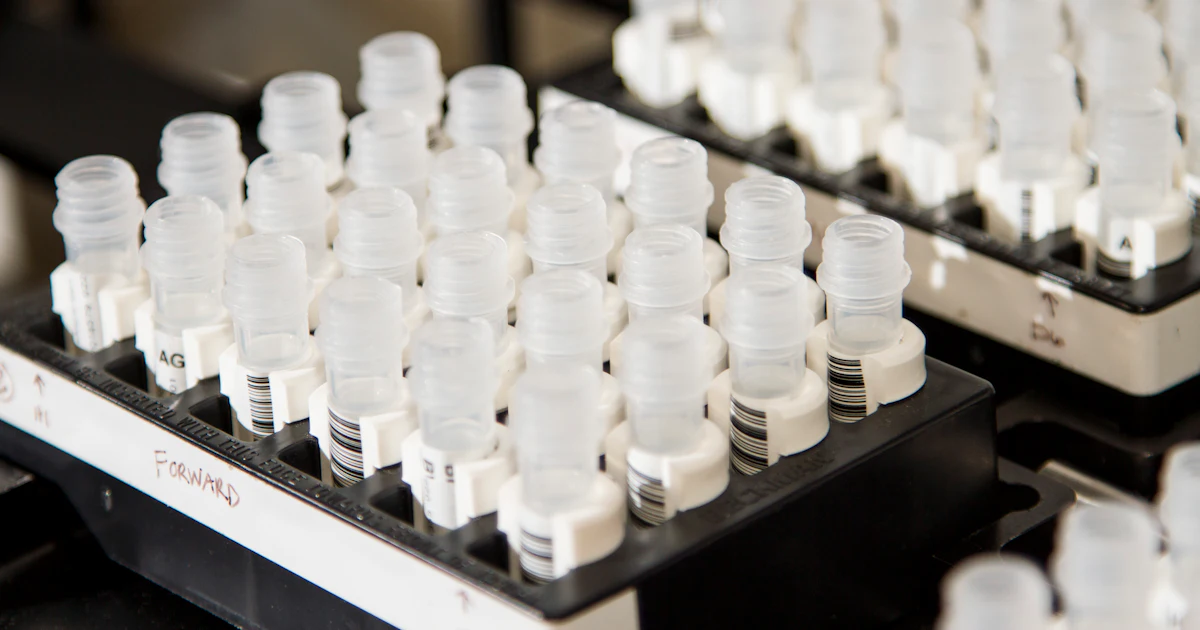
Finished material arrives lyophilized, meaning freeze-dried to a stable powder, and requires reconstitution before any use.
Where the Evidence Is Strong and Where It Is Not
Evidence quality across this field is uneven, and honest reading means sorting claims by tier.
Strong. Insulin and GLP-1 receptor agonists have large randomized human trials, full regulatory review, and years or decades of post-market safety data. The mechanisms are settled and the risks are documented.
Moderate. Several growth hormone secretagogues have human pharmacokinetic data showing they raise circulating growth hormone. What that translates to in body composition, recovery, or performance is far less established.
Early. BPC-157, TB-500, MOTS-c, and most longevity compounds rest largely on animal models and cell studies. The mechanisms are plausible and the human data is thin to absent.
Reading any claim starts with asking which tier it sits in. Searchable abstracts for nearly all of this work are indexed on PubMed, and approval status for any drug is verifiable at the FDA. Both take under a minute to check, and that minute filters out most of the bad information in this market.
Sourcing sits underneath all three tiers. A compound with genuine research behind it tells you nothing about the vial you actually receive. If that vial is 71% pure, or contains a different sequence entirely, the published literature has stopped being relevant to your situation. Our guide on where to buy peptides safely online covers vendor verification in detail.
FAQs About Peptides
Are peptides the same as steroids?
No. Steroids are lipid molecules built on a four-ring carbon structure and typically act on receptors inside the cell. This class consists of amino acid chains that bind receptors on the cell surface. The two differ in chemistry, mechanism, and regulatory treatment, and grouping them together is one of the most common errors in the field.
Can you take them orally?
Most chains degrade in the digestive tract before reaching the bloodstream intact. Stomach acid and digestive enzymes break the bonds apart. A small number of products are formulated with absorption enhancers or protective coatings to survive the journey, and collagen fragments from food are absorbed as smaller pieces rather than intact signaling molecules.
How long does the material stay stable?
Lyophilized powder stored cold and away from light stays stable for months to years depending on the sequence. Once reconstituted with bacteriostatic water, that window drops to weeks under refrigeration. Requirements vary by compound, and the certificate of analysis or product documentation should state them.
Are research peptides legal?
Compounds sold for laboratory research are legal to buy and possess in the United States when labeled and handled as research materials. They are not approved for human use, and selling them for human consumption is not permitted. Legal status and approval status are two separate questions that often get merged.
What does purity percentage mean on a COA?
Purity states what fraction of the material is the intended sequence, measured by HPLC. A 99% figure means 1% consists of truncated chains, synthesis byproducts, or residual solvents. Anything under 98% for research material warrants questions, and a certificate with no batch number traceable to your vial is not verification.
Batch-tested research material
Start With Verified Material
Every compound in our catalog ships with a batch-traceable certificate of analysis and third-party purity testing you can read before you order.