

GHK-Cu and Copper Peptides in Skin and Tissue Research

GHK-Cu has five decades of lab research behind it and a small, mixed human record. Here is what each layer of evidence actually shows.
GHK-Cu is a three-amino-acid peptide (glycine, histidine, lysine) bound to a copper ion. It was first described in human blood in 1973, and most of what’s known since then comes from cell cultures and animal wound models. The human data are thinner: one positive wound trial and two that found no measurable difference on objective measures. This guide covers the structure, the collagen and wound research, the gene-expression claims that get repeated everywhere, and where the close analogue AHK-Cu fits.
Table of Contents
- What Is GHK-Cu?
- How GHK-Cu Behaves in Cell and Animal Studies
- The Gene-Expression Claims, Read Carefully
- What Human Trials Have Found
- AHK-Cu, the Close Analogue
- Where FDA Stands on GHK-Cu
- FAQs About GHK-Cu
What Is GHK-Cu?
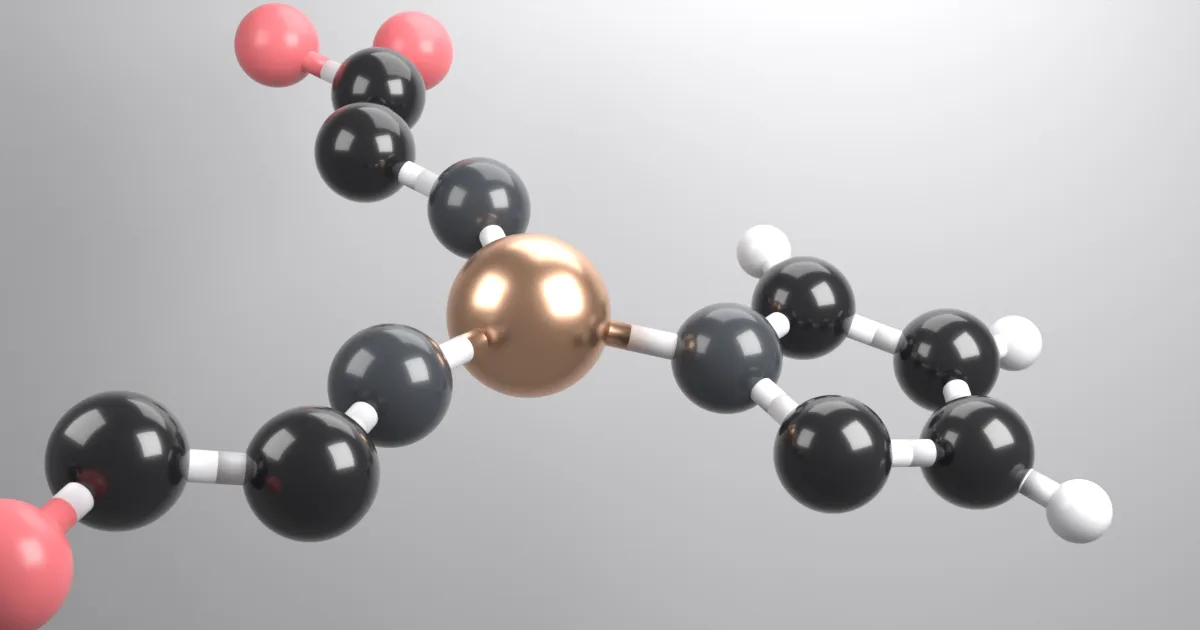
GHK is short for glycyl-L-histidyl-L-lysine. On its own it’s a simple tripeptide. It binds copper(II) tightly, and the copper-bound form is what gets studied and sold as GHK-Cu. Structural work shows the copper held by three nitrogen atoms when the complex is in solution (Hureau et al., 2011).
Loren Pickart and Thaler first reported it in 1973 as a tripeptide in human serum that changed how liver cells grew in culture (Pickart and Thaler, 1973).
You’ll often see a claim that plasma GHK drops from about 200 ng/mL at age 20 to about 80 ng/mL by age 60. Those figures trace back to a single unpublished 1973 thesis, cited in a later review by the same research group (Pickart and Margolina, 2018). Treat them as a historical estimate. No modern independent measurement has confirmed them.
At three amino acids, GHK is one of the smallest signaling peptides studied. Our guide to what peptides are explains how chain length shapes stability and handling across the class.
How GHK-Cu Behaves in Cell and Animal Studies
The strongest GHK-Cu data come from controlled lab settings.
In fibroblast cultures (the cells that build connective tissue), GHK-Cu increased collagen synthesis at extremely low concentrations, with the effect peaking around one nanomolar (Maquart et al., 1988). A later fibroblast study found higher levels of MMP-2, an enzyme involved in breaking down and remodeling tissue (Siméon et al., 2000).
Animal wound models point the same direction. In rats, wound chambers treated with GHK-Cu showed dose-dependent increases in collagen, glycosaminoglycans, DNA and protein, while a control tripeptide did nothing (Maquart et al., 1993). A topical gel on ischemic wounds in rats cut wound area by 64.5% by day 13, compared with 28.2% in untreated controls, and lowered inflammatory markers including TNF-alpha (Canapp et al., 2003). Rabbit wounds contracted faster, too (Cangul et al., 2006).
That consistency is real. So is the gap. A rat wound chamber is a long way from human skin, and dose, delivery and tissue all differ. The same gap runs through the BPC-157 and TB-500 literature.
The Gene-Expression Claims, Read Carefully
Much of GHK-Cu’s online reputation rests on gene data, and the details matter.
In 2010, a search of the Connectivity Map (a public database of how compounds shift gene activity in cultured cells) picked GHK as one of two compounds that reversed a gene signature linked to colorectal cancer spread (Hong et al., 2010). That was a database analysis. No cells or animals were treated to produce that result.
A 2012 study went further. It found GHK reversed a gene signature tied to emphysema, then showed that GHK restored collagen-gel contraction in fibroblasts taken from COPD lungs (Campbell et al., 2012). That one had an actual cell experiment attached.
The widely quoted figure that GHK changes the activity of roughly a third of human genes comes from the Pickart group’s own analysis of Connectivity Map data. It describes expression changes in cultured cell lines. A gene moving up or down in a dish doesn’t tell you what happens in living tissue.
What Human Trials Have Found
Three controlled human studies are indexed on PubMed. All used topical products, and the results split.
| Study | Setting | Result |
|---|---|---|
| Mulder et al. | Diabetic foot ulcers, topical gel, randomized and vehicle-controlled | Median closure of 98.5% vs 60.8% with vehicle |
| Bishop et al., 1992 | Venous leg ulcers, 0.4% cream, 86 evaluable patients | No difference from placebo |
| Miller et al., 2006 | Skin after CO2 laser resurfacing, 13 completers | No difference on blinded or instrument measures; only patient-rated satisfaction was higher |
The facial and eye-cream studies that cosmetic marketing leans on were presented as conference abstracts in 2002 and never published in an indexed journal. Their full data aren’t available to review.
Injected GHK-Cu has no controlled human trial behind it. ClinicalTrials.gov lists a Phase 2 study of a topical GHK-Cu gel for wounds that is currently recruiting, which may add useful data once it reports.
AHK-Cu, the Close Analogue
AHK-Cu swaps GHK’s glycine for alanine (L-alanyl-L-histidyl-L-lysine), also bound to copper.
Its research base is one indexed study. In cultured human hair follicles, AHK-Cu lengthened the follicles and increased proliferation of dermal papilla cells at very low concentrations (Pyo et al., 2007). Its effect on cell death did not reach statistical significance. No animal studies or registered human trials turned up.
Specific percentages you may see attached to AHK-Cu on other sites go beyond anything in that abstract. Both GHK-Cu and AHK-Cu are in our catalog as research material, with GHK-Cu also available as a 10-pack.
Where FDA Stands on GHK-Cu
GHK-Cu isn’t an approved drug, and its place on FDA’s compounding lists has shifted during 2026.
FDA’s page on bulk substances that may present significant safety risks lists injectable GHK-Cu among withdrawn nominations. There, the agency cites the risk of immune reactions tied to peptide aggregation and impurities, along with limited human data. As of FDA’s May 2026 list update, GHK-Cu for non-injectable routes sits in the group of substances still under evaluation, and FDA has said it plans to consult its Pharmacy Compounding Advisory Committee on it.
Research-grade GHK-Cu sits outside all of that. It’s sold for laboratory work, and its value depends on what’s actually in the vial. A certificate of analysis should name the compound, report HPLC purity, and carry a batch number matching your vial. Our guide to evaluating research peptide quality walks through those checks.
FAQs About GHK-Cu
Is GHK-Cu the same as the copper peptides in skincare?
Usually, yes. “Copper peptide” on a skincare label most often means GHK-Cu. Concentration and formulation vary widely between products, and most cosmetic claims rest on small studies that never appeared in indexed journals.
Is there human safety data for injected GHK-Cu?
No controlled trial has tested it, and FDA itself points to limited human data. Every indexed human study used a topical product. Our overview of peptide safety research explains why that distinction matters.
How is GHK-Cu different from AHK-Cu?
The two differ by one amino acid. The bigger difference is the evidence. GHK-Cu has decades of cell, animal and some human work. AHK-Cu has a single published hair-follicle study.
Is the “age-related decline” in GHK well established?
Not really. The 200 to 80 ng/mL figures come from one unpublished 1973 thesis. They get repeated often, but no recent study has measured the decline independently.
How should GHK-Cu be stored?
Lyophilized powder keeps best cold and away from light. Requirements vary by compound, so check the product documentation and certificate of analysis for your specific vial. Our lab handling guide covers reconstitution and sterile technique.
Batch-tested research material
Read the COA Before You Order
GHK-Cu and AHK-Cu in our catalog ship with a batch-traceable certificate of analysis. You can review the certificates before you buy.
All products are sold strictly for lawful laboratory research purposes only and are not for human or veterinary use or human consumption. This article summarizes published research for general information and is not a substitute for advice from your doctor. References: each study named above links to its record on PubMed, ClinicalTrials.gov, or FDA.gov.